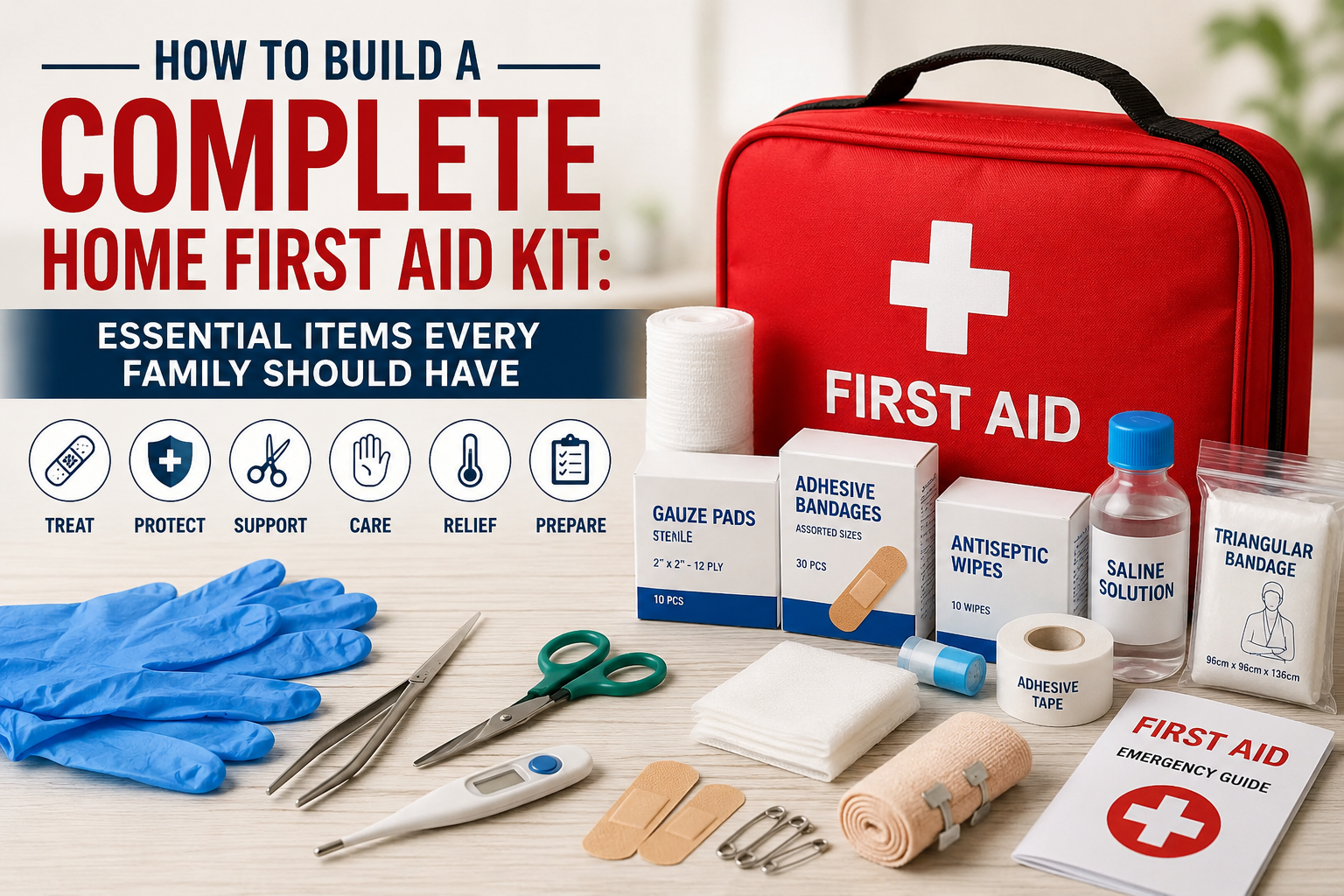
Accidents don’t send a warning. A child scrapes a knee on the driveway, a kitchen knife slips, or a hiking trip ends with a twisted ankle miles from the nearest ER. In moments like these, a well-stocked home first aid kit is the difference between a quick fix at the kitchen table and an unnecessary trip to urgent care.
Yet studies consistently show that most American households either don’t have a first aid kit at all, or have one that’s missing critical supplies, expired, or buried in a closet no one can find in an emergency. This guide walks you through exactly what belongs in a complete family first aid kit, why each item matters, and how to organize it so it’s actually usable when you need it most.
Why Every Home Needs a First Aid Kit
The Red Cross estimates that most home injuries — cuts, burns, sprains, and minor allergic reactions — can be managed on the spot with the right supplies and a little know-how. Having a dedicated emergency medical kit for home use isn’t about replacing professional medical care; it’s about buying time, preventing infection, and stabilizing a situation until help arrives or a doctor’s visit becomes necessary.
A good kit also reduces panic. When something happens, decision fatigue kicks in fast. A kit that’s organized, labeled, and complete means you’re not scrambling through drawers while someone is bleeding or in pain.
Home First Aid Kit Essentials: The Complete Checklist
Below is a first aid supplies checklist based on guidelines from the American Red Cross and the U.S. Department of Homeland Security’s Ready.gov program. Think of this as your baseline — you’ll want to customize it based on your family’s specific needs (more on that below).
1. Wound Care Basics
- Adhesive bandages in multiple sizes (including fabric and waterproof options)
- Sterile gauze pads (various sizes: 2×2, 4×4)
- Adhesive medical tape
- Roller gauze bandages for larger wounds
- Butterfly closure strips
- Non-latex disposable gloves
- Antiseptic wipes or antiseptic solution
- Antibiotic ointment
- Sterile eye pads
2. Tools and Instruments
- Fine-tipped tweezers (for splinters and stingers)
- Small scissors, preferably with rounded tips
- Digital thermometer
- Instant cold packs
- CPR breathing barrier or face shield
- Safety pins
- Flashlight with extra batteries
3. Medications — Basic First Aid Items
- Pain and fever relievers (acetaminophen and ibuprofen — both adult and children’s formulations)
- Antihistamine tablets (for allergic reactions)
- Hydrocortisone cream (for itching and rashes)
- Antacids
- Aloe vera gel (for burns)
- Any prescribed emergency medications specific to a family member’s condition, such as an epinephrine auto-injector or inhaler
4. Emergency & Reference Materials
- A printed first aid manual or quick-reference card
- Emergency contact list (doctors, poison control, family members)
- Local Poison Control number: 1-800-222-1222
- Copies of insurance cards and any critical medical information (allergies, conditions, medications)
5. Extras Worth Adding
- Elastic (ACE) bandages for sprains
- A splint or SAM splint for suspected fractures
- Instant hot packs (for muscle strains)
- Disposable face masks
- A small notepad and pen to track symptoms, times, and doses given
Building a Family First Aid Kit: Customize for Your Household
A family first aid kit should reflect who’s actually in your home. Here’s how to think about customization:
Homes with young children: Add child-safe thermometers, saline nasal spray, teething gel, and children’s-strength medications. Store the kit up high or in a locked box, since curious toddlers shouldn’t have easy access.
Homes with pets: Consider a separate small pet first aid kit, or add pet-safe antiseptic and a muzzle (for injured, frightened animals) to your existing supplies.
Homes with elderly family members or chronic conditions: Include a blood pressure monitor, a blood glucose meter if needed, and clearly labeled medication schedules.
Outdoor or active families: Add moleskin for blisters, an emergency blanket, insect sting relief, and a tick removal tool.
Where to Store Your Kit
Location matters as much as content. Best practices include:
- Kitchen or bathroom cabinet for everyday accessibility
- Car for road trips and commutes
- Travel-sized version in a backpack or purse
- Keep it out of direct sunlight and away from moisture, which can degrade medications and adhesives faster
Store the kit somewhere every adult (and older child) in the house knows how to find — not hidden away for “safekeeping.” A first aid kit is only useful if it’s accessible in seconds.
Maintaining Your First Aid Kit
An unmaintained kit is almost as bad as no kit at all. Set a recurring reminder — most families do this alongside daylight saving time changes, twice a year — to:
- Check expiration dates on medications and ointments
- Restock anything that’s been used
- Replace worn-out bandages or leaking cold packs
- Confirm emergency contact information is current
Final Thoughts
Building a proper home first aid kit doesn’t require a huge budget or a medical degree — just a little planning and the right checklist. Whether you buy a pre-assembled kit or build your own from scratch, the goal is the same: be ready before you need to be.
For official emergency preparedness guidance, the American Red Cross and Ready.gov both offer downloadable checklists and region-specific advice for U.S. households. If you or a family member ever ingests something potentially harmful, contact the National Poison Control hotline immediately at 1-800-222-1222.
Frequently Asked Question
1. What are the most important items to include in a home first aid kit?
At minimum, your kit should have adhesive bandages, sterile gauze, antiseptic wipes, antibiotic ointment, tweezers, scissors, disposable gloves, a thermometer, pain relievers, and an emergency contact list. These cover the vast majority of minor household injuries.
2. How often should I check and restock my first aid kit?
Check your kit at least twice a year many families do this when clocks change for daylight saving time. Look for expired medications, used-up supplies, and damaged packaging.
3. Where is the best place to store a first aid kit at home?
Choose a spot that’s easy to reach in an emergency but out of reach of young children a hallway closet, kitchen cabinet, or bathroom shelf works well. Avoid humid areas like under the sink, since moisture can degrade bandages and medications faster.
4. Do I need a separate first aid kit for my car?
Yes. A compact car kit with bandages, gauze, antiseptic, gloves, and a flashlight is recommended for road trips and daily commutes, since roadside injuries can happen far from home supplies.
5. What size first aid kit does a family need?
It depends on household size and activity level. A family of four typically needs a kit with more bandages, larger gauze pads, and duplicate items compared to a single-person kit. Active or outdoor families should size up further.
6. Can I buy a pre-made first aid kit instead of building one myself?
Yes, pre-assembled kits are a convenient starting point, but most are designed as a baseline. It’s a good idea to check the contents against a checklist like this one and add family-specific items such as prescribed medications or child-specific supplies.
7. What medications should be included in a basic first aid kit?
Common additions are acetaminophen or ibuprofen for pain and fever, antihistamines for allergic reactions, hydrocortisone cream for skin irritation, and antacids. Include any doctor-prescribed emergency medications, like an epinephrine auto-injector, if a family member needs one.
8. How do I childproof a first aid kit while keeping it accessible?
Store the kit in a container with a child-resistant latch, placed on a high shelf or in a locked cabinet. Make sure every adult in the household knows the location and can access it quickly if needed.
9. What should I do if someone in my home ingests something poisonous?
Call the National Poison Control hotline immediately at 1-800-222-1222. Do not induce vomiting unless specifically instructed to by a poison control specialist or medical professional.
10. How is a first aid kit different from an emergency preparedness kit?
A first aid kit is focused on treating injuries and minor medical issues (cuts, burns, sprains). An emergency preparedness kit is broader, covering survival needs during disasters water, food, flashlights, radios, and blankets — and often includes a first aid kit as one component.